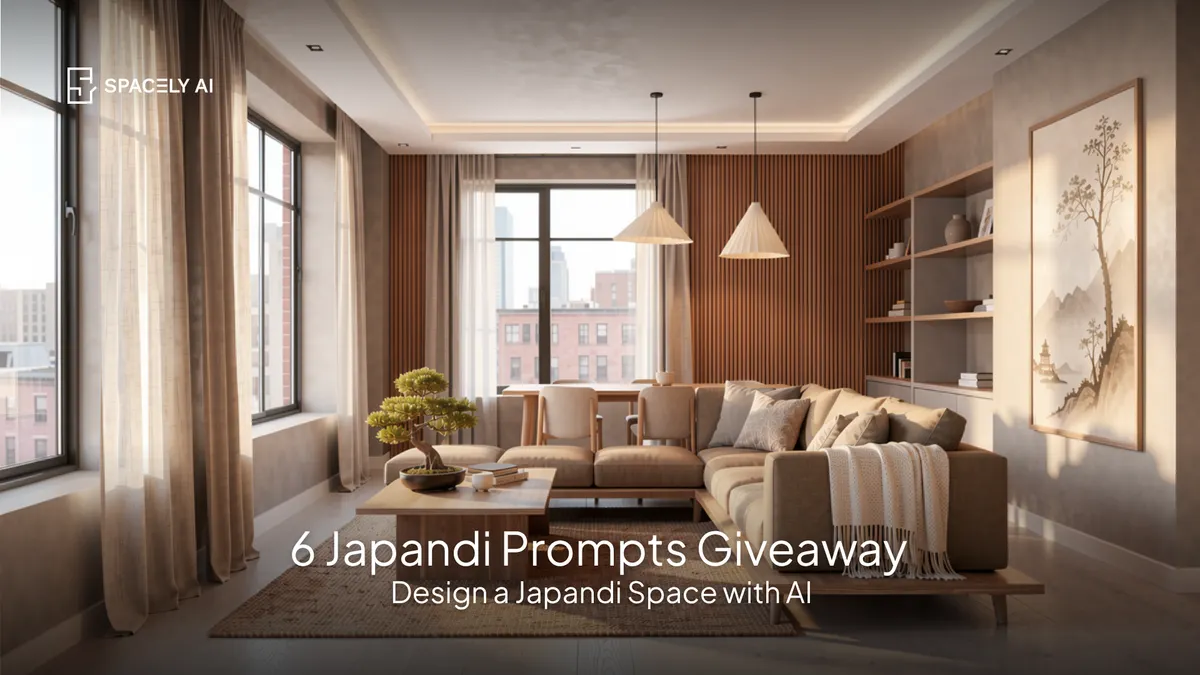
Japandi blends Japanese and Scandinavian design: warm, minimal, and natural. Here's how to get the look, with copy-paste prompts to try on your own room.
It's built on clean lines, natural materials (a mix of light and dark woods), a warm neutral palette, low-profile furniture, handcrafted texture, and a calm, uncluttered feel rooted in wabi-sabi, the idea of finding beauty in imperfection. Think of it as Scandinavian minimalism with Japanese warmth and craft — simple, but never cold.
A good Japandi prompt names that vocabulary: the muted warm palette, the natural woods, the low furniture, the minimal-but-warm mood, plus the light and camera. Below are copy-paste Japandi prompts by room, plus the structure to adapt them, so you can test the look on a photo of your own space before committing.
What defines Japandi design?
Japanese warmth and craft meets Scandinavian simplicity. Japandi takes the best of both traditions.
From Scandinavian design it borrows clean lines, light woods, functionality, and a bright, uncluttered feel. From Japanese design it takes warmth, natural materials, handcrafted texture, low furniture, and the calm of wabi-sabi, beauty in the imperfect and the natural.
The result is a space that's minimal but never stark: a muted, warm neutral palette (beige, taupe, warm gray, muted green, with black accents), a contrast of light and dark woods, natural textures like linen, stone, paper, and ceramics, low-profile furniture, and just a few intentional objects rather than clutter. Calm, warm, and grounded is the goal.
What makes a good Japandi prompt?
Name the palette, the natural materials, the low furniture, and the calm mood.
| Element | Specific (Japandi) |
|---|
| Palette | "warm beige, taupe, muted green, black accents" |
| Materials | "light oak and walnut, linen, stone, handmade ceramics" |
| Furniture | "low-profile, clean-lined, functional" |
| Mood | "minimal but warm, calm, wabi-sabi" |
| Texture | "natural, handcrafted, tactile" |
| Light & camera | "soft natural light, eye-level wide-angle" |
Which Japandi prompts can you copy?
Pick your room and adjust the materials to taste.
- Japandi living room:
"Japandi living room, low-profile linen sofa, light oak and walnut furniture, warm beige and taupe palette, black accents, handmade ceramics, a few branches in a vase, soft natural light, eye-level wide-angle."
- Japandi bedroom:
"Japandi bedroom, low platform bed, natural linen bedding in muted tones, light oak nightstands, warm neutral walls, minimal styling, paper lantern light, soft daylight."
- Japandi kitchen:
"Japandi kitchen, light wood and matte black cabinets, stone counters, handmade ceramic bowls, minimal open shelving, warm neutral palette, soft daylight, wide-angle."
- Japandi dining:
"Japandi dining room, low solid-wood table with clean-lined chairs, warm muted palette, a single ceramic centerpiece, paper pendant light, natural light, eye-level."
- Japandi bathroom:
"Japandi bathroom, wood vanity, stone basin, matte black fixtures, micro-cement walls, warm neutral tones, a plant, soft diffused light, calm and spa-like."
- Japandi home office:
"Japandi home office, light oak desk, low shelving, linen chair, warm muted palette, handmade objects, a plant, soft natural light, uncluttered, eye-level."
How do you keep Japandi warm, not cold?
Lean on warm tones, natural wood, and handcrafted texture. The line between Japandi and cold minimalism is warmth. Keep the palette warm and muted rather than stark white, contrast light woods with a few darker tones for depth, and layer natural, tactile materials such as linen, stone, paper, handmade ceramics.
A few imperfect, natural, or handmade pieces embody wabi-sabi and give the space soul; a branch or a plant brings in nature. And keep it uncluttered but not empty — Japandi is about a few intentional things, beautifully made. Get the warmth and texture right, and the minimalism reads calm and inviting instead of bare.
FAQ
What is Japandi design? Japandi is the fusion of Japanese and Scandinavian design: minimal, warm, and natural. It combines Scandinavian clean lines and light woods with Japanese warmth, natural materials, low furniture, and wabi-sabi calm, resulting in a muted, warm palette, a mix of light and dark woods, natural textures, and an uncluttered but cozy feel.
How do you write a Japandi prompt? Name the warm muted palette (beige, taupe, muted green, black accents), the natural woods (light oak with walnut), low-profile furniture, natural textures like linen and handmade ceramics, and a calm, minimal-but-warm mood, plus the light and camera. Start from a photo of your room so the layout stays true, and use specific materials rather than just "Japandi."
How do you keep Japandi warm and not cold? Use a warm, muted palette rather than stark white, contrast light woods with darker tones for depth, and layer natural, tactile materials: linen, stone, paper, handmade ceramics. A few imperfect or handmade pieces and a plant add wabi-sabi warmth. Keep it uncluttered but not empty, and the minimalism feels calm and inviting.
More design workflow insights on the Spacely AI blog →
Get started
→ Create your free account
→ Watch the full tutorial on YouTube
→ Explore the member plan
For more information and media inquiries, please contact
Website: spacely.ai
Facebook: facebook.com/spacelyai
Instagram: instagram.com/spacely.ai
Email: [email protected]