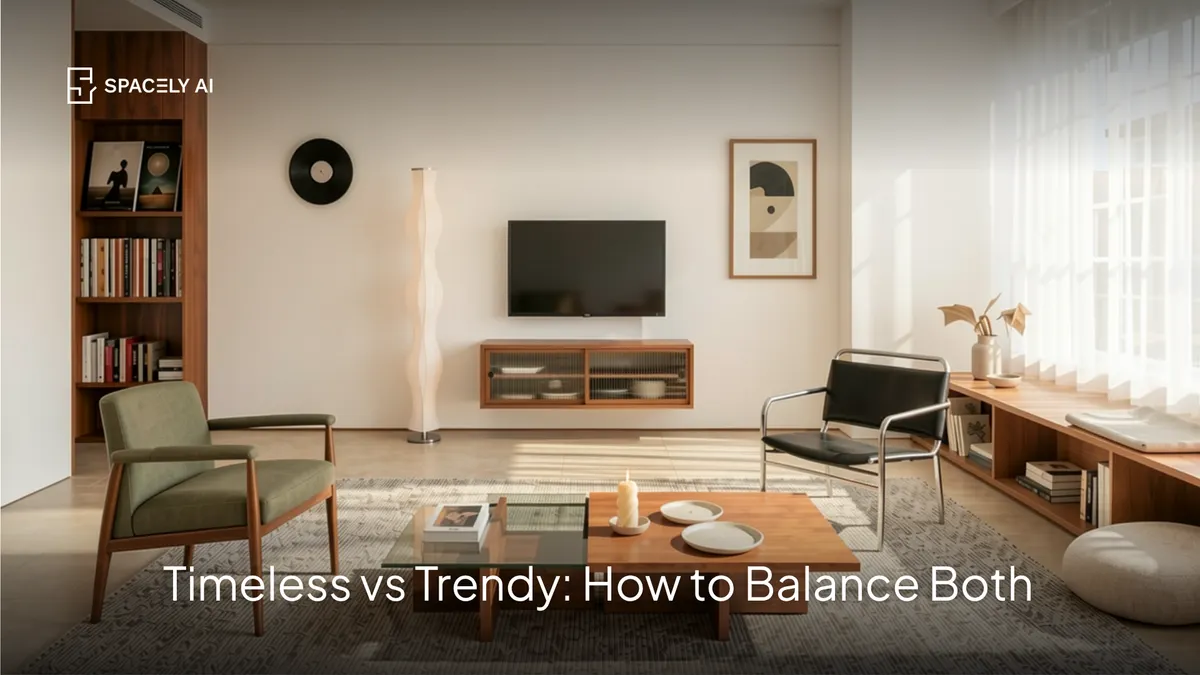
Should your home be timeless or trendy? The best answer is both. Here's how to build a timeless foundation and layer in trends you can swap out later.
The best answer to "should my home be timeless or trendy?" is both. The way to have both is to build a timeless foundation and layer trends on top as easily-swapped accents. Timeless design lasts for decades because it isn't tied to the moment: quality pieces, a classic and mostly neutral palette, natural materials, good proportion, and restraint. Trendy design is fun and current but, by definition, dates.
The mistake is treating them as a choice. Instead, put your money and permanence into timeless elements, the big, expensive, hard-to-change things and express trends through the small, cheap, easy-to-change ones. That way your home feels current now and still looks right in ten years, and refreshing it means swapping a few accents rather than redoing a room.
Below: the difference between the two, how to split your choices, and a simple rule for where each belongs. And because the easiest way to test a trend is to see it before you buy, you can preview an accent or a whole scheme on a photo of your room with Spacely AI first.
What's the difference between timeless and trendy?
One is built to last; the other is built for now. Timeless design rests on enduring principles; quality, classic and neutral colors, natural materials, good proportion, and restraint. As a result, it stays looking considered for years. Trendy design leans on of-the-moment colors, shapes, and motifs that feel current precisely because they're new, which also means they eventually feel dated. Neither is "better." Trends bring personality and freshness; timelessness brings longevity and calm. The art is using each for what it's good at rather than committing your whole home to one.
How do you split timeless and trendy choices?
Timeless for the permanent, trendy for the changeable.
The rule that makes this easy: the bigger, more expensive, and harder to change something is, the more timeless it should be.
| Keep timeless (permanent, costly) | Go trendy (cheap, swappable) |
|---|
| Sofa, bed, dining table | Cushions and throws |
| Cabinetry and counters | Wall color / an accent wall |
| Flooring | Art and prints |
| Large rugs | Small décor and objects |
| Architectural finishes | Lighting accents, plants |
Anchor the room in timeless foundations, then bring in whatever's current through the right-hand column — the things you can change in an afternoon without regret or real cost.
How much trend is the right amount?
Enough to feel current, little enough to stay calm. A good ratio is a large timeless base with a small trend-driven layer; think most of the room built to last, with a handful of current accents. That keeps the space feeling fresh and personal without tying it to a single year. When a trend passes, you swap the cushions, the art, or a coat of paint, and the room updates instantly while its foundation stays intact. If you're unsure whether a trend will still feel right on your timeless base, preview it on a photo of your actual room first — trying the accent or color in place tells you far more than imagining it.
The bottom line
Timeless versus trendy is a false choice, the smart approach is both. Build a timeless foundation with quality pieces, a classic palette, natural materials, and good proportion, then layer trends through easily-swapped accents like cushions, art, paint, and décor. Keep the permanent, expensive elements timeless and the cheap, changeable ones current, and your home stays fresh now and lasting for years. Test a trend on a photo of your room before you commit, and you'll balance the two with confidence.
FAQ
Should my home be timeless or trendy? Both. Build a timeless foundation — quality pieces, a classic neutral palette, natural materials, good proportion — and layer trends on top through easily-swapped accents. That way your home feels current now and still looks right in years, and updating it means changing a few accents rather than redoing a room.
Which things should be timeless and which can be trendy? Make the big, expensive, hard-to-change elements timeless such as sofa, bed, cabinetry, flooring, large rugs, and express trends through the cheap, changeable ones: cushions, art, wall color, small décor, and lighting accents. The harder something is to change, the more timeless it should be.
How do I add trends without dating my home? Keep trends to a small, swappable layer over a timeless base — a handful of current accents rather than a whole trend-driven room. When the trend passes, change the accents and the room updates instantly. Previewing a trend on a photo of your room first helps you check it works on your timeless foundation.
More design workflow insights on the Spacely AI blog →
Get started
→ Create your free account
→ Watch the full tutorial on YouTube
→ Explore the member plan
For more information and media inquiries, please contact
Website: spacely.ai
Facebook: facebook.com/spacelyai
Instagram: instagram.com/spacely.ai
Email: [email protected]